8 Revelations About the Universe's Most Massive Black Holes
For years, astronomers assumed that the largest black holes in the universe were born that way—colossal remnants of ancient, supermassive stars. But new research suggests a far more dramatic origin story. By analyzing gravitational-wave signals from dozens of black hole collisions, scientists have uncovered evidence that the heaviest black holes are actually 'cosmic recyclers,' forged through repeated smashups inside incredibly dense star clusters. These violent chain reactions produce a distinct class of rapidly spinning black holes that stand apart from ordinary ones formed by dying stars. Here are eight key insights from this groundbreaking discovery.
1. Not Born Giants
The universe's biggest black holes may not begin their lives as giants. Until recently, a common belief held that black holes reaching hundreds of solar masses originated directly from the collapse of very massive stars in the early universe. However, the new gravitational-wave evidence points to a different path—one of growth through repeated collisions. These giants are built over time, not born in a single dramatic event. This challenges our understanding of black hole formation and suggests that the most massive examples we detect are the end products of a long and violent evolutionary process, rather than primordial behemoths.
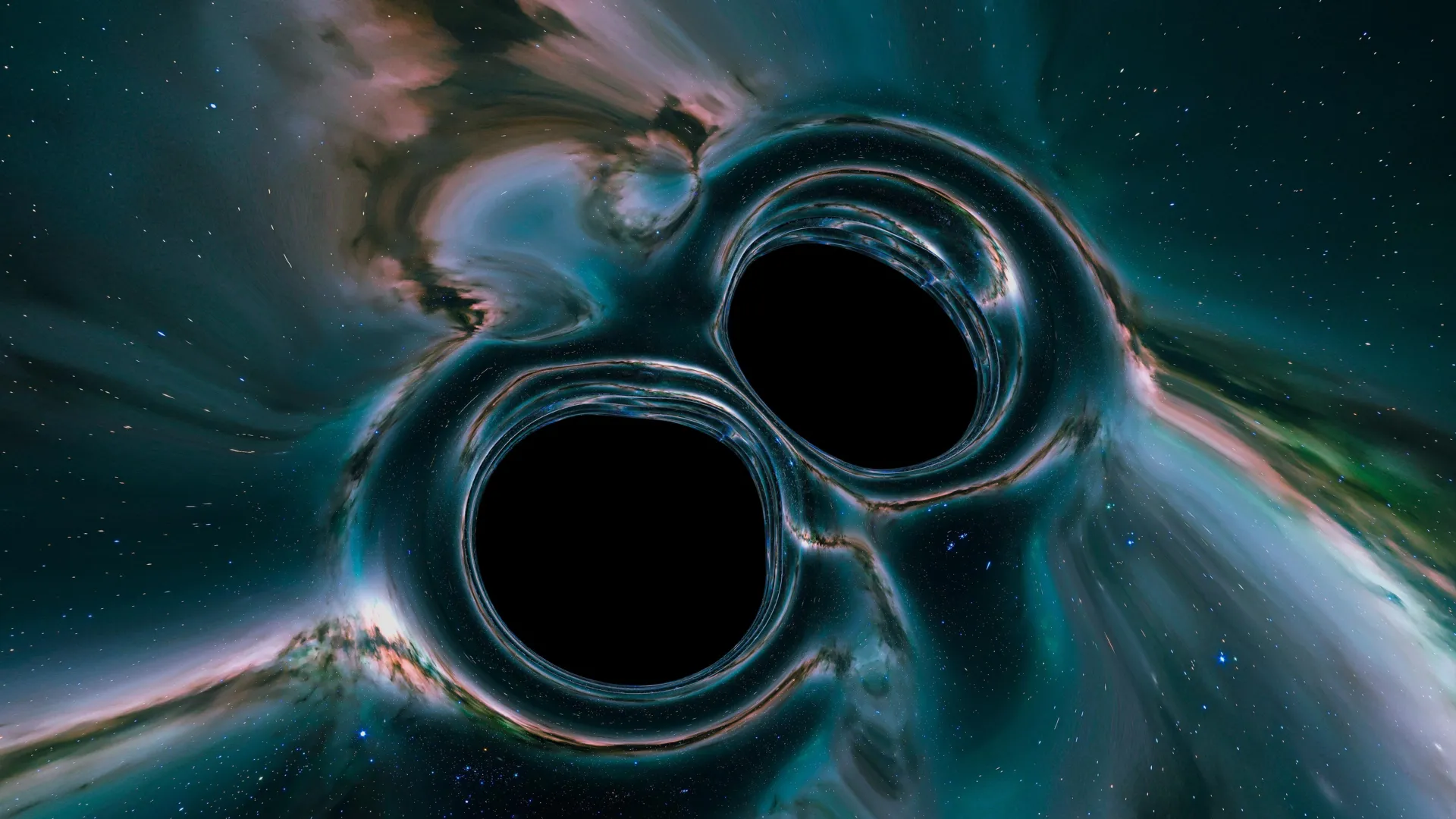
2. Evidence from Gravitational Waves
The key to unlocking this mystery came from gravitational-wave observatories like LIGO and Virgo. These facilities detect ripples in spacetime caused by black hole mergers. By studying dozens of these signals, scientists noticed a pattern: the heavier black holes involved in mergers have distinct spin properties. The data shows that a significant fraction of mergers involve black holes that are both massive and rapidly spinning—a combination that is rare in ordinary stellar-mass black holes. This statistical fingerprint strongly supports the idea that these heavyweights have undergone multiple mergers, each time gaining mass and spin in a crowded environment.
3. Cosmic Recyclers Defined
The term 'cosmic recyclers' captures the essence of how these black holes grow. Instead of forming once and remaining static, they repeatedly merge with other black holes, each time recycling themselves into a larger, more massive object. This process can only happen in regions where black holes are numerous and close together, such as the dense cores of star clusters. The recycling analogy is apt: like scrap metal being melted down and reforged, these black holes are continuously remade through violent interactions, gradually building up to their enormous sizes over cosmic time.
4. The Role of Crowded Star Clusters
Repeated mergers require a unique environment—one where black holes can find each other multiple times. That environment is found in incredibly dense star clusters, sometimes containing millions of stars packed into a small volume. In such clusters, black holes sink to the center due to gravitational interactions, forming a dense subcluster where collisions become almost inevitable. These star clusters act as cosmic factories, churning out ever-heavier black holes through successive mergers. Without this crowded setting, a black hole would likely merge once and then remain isolated, unable to grow further through further collisions.
5. Chain Reactions of Mergers
Once the first merger occurs in a star cluster, it sets off a chain reaction. The newly formed, heavier black hole—now more massive—sinks even deeper into the cluster's core, increasing its chances of encountering another black hole. With each subsequent merger, the black hole becomes more massive and also sinks faster, accelerating the process. This positive feedback loop produces black holes that can reach hundreds of solar masses. The chain reaction is violent and rapid by astronomical standards, potentially completing within a few billion years. This explains why we detect such massive black holes in the present-day universe—they are the products of this relentless assembly line.
6. A Distinct Class of Black Holes
The black holes formed through this chain reaction are not just bigger; they belong to a distinct class with unique characteristics. They stand apart from ordinary black holes that form directly from dying stars. The key distinction lies in their spin and mass distribution. While stellar-mass black holes typically have masses up to about 20 solar masses and modest spins, the recycled black holes can exceed 100 solar masses and exhibit very high spins. This clustering of properties suggests a separate formation channel. Researchers now classify them as a separate population, potentially bridging the gap between stellar-mass black holes and supermassive ones found at galaxy centers.
7. Rapidly Spinning Giants
One of the most telling features of these recycled black holes is their rapid spin. When two black holes merge, their combined spin is influenced by the angles and speeds of the original spins. Multiple mergers in a cluster tend to align and amplify the spin, resulting in black holes that spin at nearly the maximum possible rate. This is in stark contrast to black holes formed in isolation, which often have slower, more random spins. The gravitational-wave data clearly shows that a subset of merged black holes have spins that are both high and statistically aligned, providing strong evidence for the repeated merger scenario in dense clusters.
8. Contrast with Stellar-Mass Black Holes
To appreciate the uniqueness of these recycled giants, it helps to compare them with ordinary black holes born from dying stars. Most black holes we know of come from the collapse of massive stars at the end of their lives. These stellar-mass black holes typically range from a few to a few tens of solar masses and form in relative isolation or binary systems. They rarely undergo more than one merger in their lifetime. In contrast, the 'cosmic recyclers' undergo multiple mergers, achieving masses far beyond the stellar limit and spinning much faster. This fundamental difference underscores the role of environment in shaping black hole evolution.
In conclusion, the discovery that the universe's largest black holes are forged through repeated mergers in star clusters revolutionizes our understanding of black hole growth. The gravitational-wave data from LIGO and Virgo has opened a new window into these cosmic recyclers, revealing a distinct population of rapidly spinning giants. Future observations will help refine our models of star cluster dynamics and merger rates, potentially uncovering even more exotic black hole populations. As we continue to listen to the ripples in spacetime, the story of how black holes become the universe's most massive objects is only just beginning to unfold.
Related Articles
- 7 Key Facts About the Artemis III Moon Rocket Core Stage Move
- How Scientists Uncovered the Cosmic Sweet Spot That Makes Life Possible
- 10 Key Insights from China's Latest Climate and Energy Policy Shifts (April 2026)
- Mars Odyssey Team Marks 25 Years with a Stunning Global Map
- How Oxford Physicists Achieved the First-Ever Quadsqueezing: A Step-by-Step Guide to Quantum Control
- 6 Surprising Insights into How Squid Survived Mass Extinctions
- How to Use T-Mobile's T-Satellite Service for Off-Grid Roaming in Canada and New Zealand
- The Hidden Reversal: How Climate Change Transforms Winter Lakes