How Chinese Electric Vehicle Owners Are Leaving Range Anxiety Behind
Introduction
The fear of running out of battery power—commonly known as range anxiety—has long been cited as a major barrier to electric vehicle (EV) adoption. Yet, a growing body of evidence suggests that this concern is largely exaggerated, especially among actual EV drivers. Nowhere is this clearer than in China, where a combination of rapid infrastructure expansion, improved battery technology, and shifting driver attitudes has made range anxiety a relic of the past for many. This article explores how Chinese EV owners have moved beyond range anxiety and what that means for the global shift to electric mobility.
Understanding Range Anxiety
Range anxiety refers to the worry that an EV will run out of charge before reaching a destination or charging point. It has been repeatedly cited in surveys as a top consumer concern. However, data consistently shows that new EV owners quickly adapt: within weeks, most find that their daily driving needs are easily met by home or workplace charging. The phenomenon is often more pronounced among non-EV drivers who imagine scenarios that rarely materialize in practice.
Reality vs. Perception
A decade ago, even when EV ranges were just 100–150 km and charging stations were scarce, early adopters reported low levels of anxiety. Today, with many Chinese EVs offering 400–600 km of range and a charging station network that has grown exponentially, the gap between perception and reality has widened. As one reader explained, “It’s really anxiety about the unknown, not about the car.” This insight is crucial for understanding the Chinese market, where infrastructure has kept pace with demand.
China's Charging Infrastructure Boom
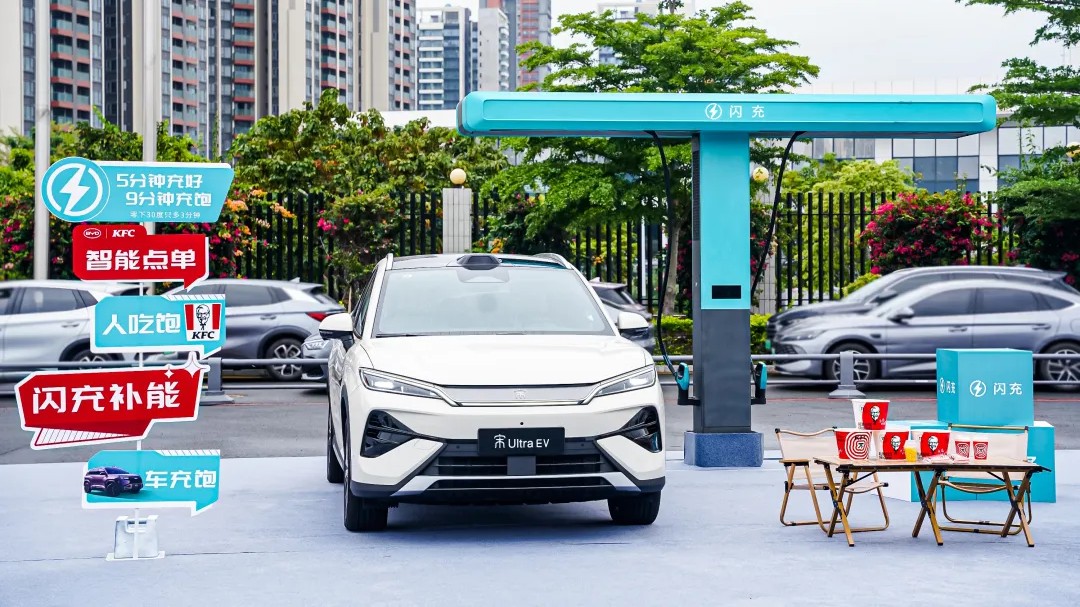
China is the undisputed global leader in public charging infrastructure. According to the China Electric Vehicle Charging Infrastructure Promotion Alliance, the country had over 6.8 million charging units by the end of 2023, including 1.1 million public fast chargers. This network continues to expand at a rate of roughly 30% per year. Highways in major urban regions often have charging stations every 50 km, and many expressway service areas now feature multiple fast chargers capable of replenishing 80% of battery capacity in 20–30 minutes.
Additionally, residential charging is widely available. In cities like Shanghai and Beijing, many apartment complexes have installed shared chargers, and the government has offered subsidies for home charger installation since 2018. This means that over 70% of Chinese EV owners can charge at home or at work, drastically reducing reliance on public infrastructure.
Survey Data: Drivers Speak
Recent surveys confirm that range anxiety among Chinese EV owners is significantly lower than among potential buyers. A 2023 study by the China Automotive Technology & Research Center found that only 12% of EV drivers reported range anxiety as a frequent concern, compared to 54% of non-EV drivers considering an EV. Moreover, the percentage of concerned drivers drops to just 5% after one year of ownership. These numbers mirror patterns seen in other markets, but China's high density of chargers and relatively short commutes accelerate the adjustment.
Battery Range Improvements
Battery technology has played a key role. Chinese battery giants like CATL and BYD have pushed energy density to new heights. The latest generation of lithium iron phosphate (LFP) batteries offers 30% more range than five years ago, while also costing less. Many mass-market Chinese EVs now achieve 500 km on a single charge under the CLTC (China Light-Duty Vehicle Test Cycle) standard, which is sufficient for the average urban commute of 30–40 km per day. Even long-distance trips, once a source of anxiety, have become routine thanks to the fast-charging network.
Lessons for Global Markets
The Chinese experience offers valuable lessons for other countries. First, infrastructure investment must precede or at least parallel EV sales growth. China’s coordinated national efforts—combining subsidies, land use policies, and grid upgrades—created a dense network before anxiety could take hold. Second, education and test drives combat perception. Many Chinese dealerships offer extended test drives that allow potential buyers to experience a full day of driving, including charging. Third, standardization helps. China’s GB/T charging standard, while not perfect, ensures interoperability across most public chargers, reducing another layer of uncertainty.
For countries still struggling with range anxiety, the Chinese model suggests that the condition is largely curable. As one analyst noted, “Once people actually drive an EV and see the chargers around them, the fear evaporates.”
Conclusion
Range anxiety, once hyped as an insurmountable obstacle, is fading in China as EV drivers accumulate real-world experience. The combination of extensive charging infrastructure, improved battery range, and supportive government policies has created a virtuous cycle: more chargers lead to more sales, which justify more chargers. Chinese EV owners are rolling past range anxiety, and the rest of the world is taking notes. The key takeaway is that the greatest barrier to adoption may not be technology but perception—and perception can be changed.
Related Articles
- Why Flutter's Websites Now Run on Dart and Jaspr
- 10 Reasons Chinese EV Drivers Have Left Range Anxiety Behind
- How to Determine if the 2026 Hyundai IONIQ 5 Is the Right Affordable EV for You
- Top 6 Green Tech Deals: Velotric E-Bike, Anker Power Station, EcoFlow, and More
- ESS and Alsym Energy Forge Sodium-Ion Battery Partnership
- 10 Critical Insights into Australia’s Green Iron Race Against Time
- Volkswagen ID. Polo Electric Car: Pre-Orders Open at €33,795, Affordable €25,000 Version on Horizon
- Why Indonesia's EV Push Is Really About Breaking Free from Oil Addiction: 10 Key Insights